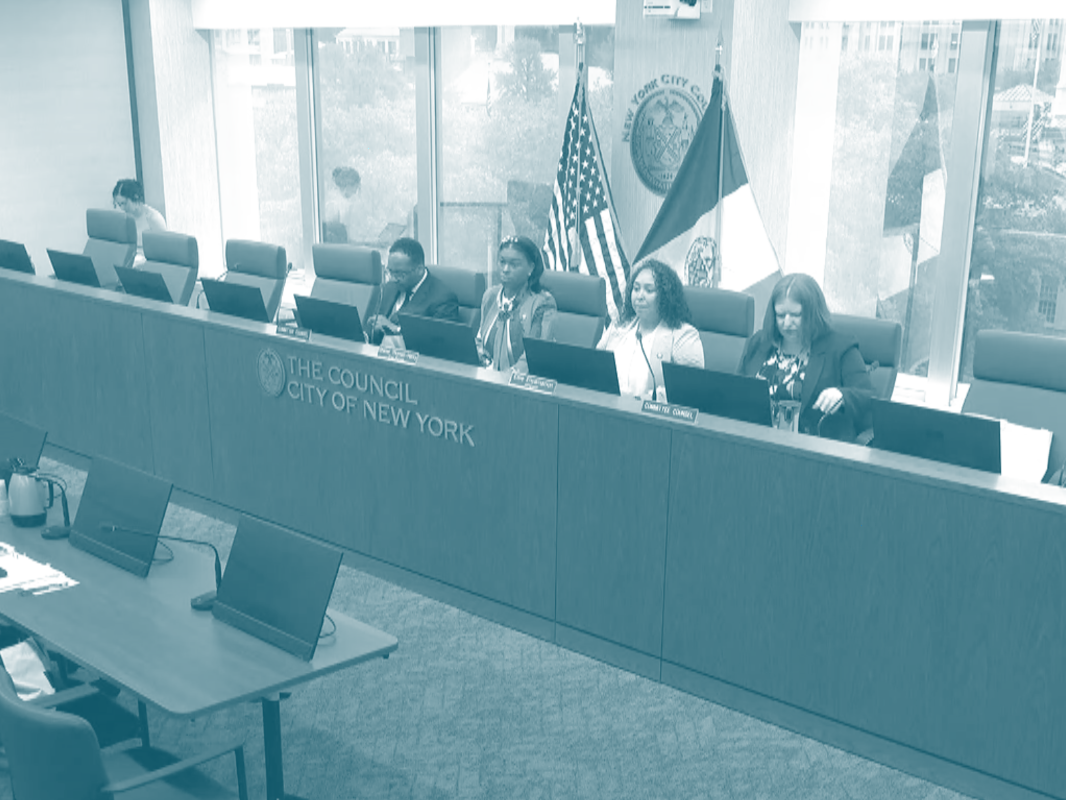
Testimony submitted to the New York City Council’s Committees on Small Business and Immigration
Thank you to the Council and members of the Committees on Small Businesses and Immigration and for inviting me to speak about the economic impacts of federal immigration policy. My name is Emily Eisner, and I am the Chief Economist and Acting Executive Director at the Fiscal Policy Institute. FPI is a nonpartisan, non-profit policy research organization committed to sound and equitable fiscal policy that strengthens the state economy for all New Yorkers.
On January 23, 2025, the Fiscal Policy Institute and the Immigration Research Initiative released a joint report ↓ on the potential economic impacts of proposed new federal immigration policies (note that I have included this report as an addendum to this testimony). At the time of release, the Trump administration had only just taken office and we did not yet know to what extent the new administration would implement the draconian policies President Trump had laid out on the campaign trail. We warned that implementing the proposed deportation policy would have severe impacts on New York’s economic and fiscal health, in addition to catastrophic humanitarian costs to New York’s immigrant families. Now, over a year into this presidential administration, we see that federal policy has in many ways exceeded our worst fears—posing real threat not only to immigrant families, documented and undocumented, but also to the New York economy. Under the current federal immigration regime, New York faces the very real possibility of economic stagnation and decline.
There are about 4.5 million immigrants in New York State, including 1.8 million who are non-citizens, and among those an estimated 670,000 who are undocumented. In 2022, people who are undocumented paid an estimated $3.1 billion in state and local taxes. New York’s economy depends on immigrants, including those without documentation. Immigrant workers—especially those who are undocumented and vulnerable—are concentrated in construction, food production and services, and care industries including childcare and home health. The Trump administration’s efforts to remove a significant portion of these workforces will make it harder for New York to produce food, build new homes, and care for our sick and elderly, pushing up prices and straining employers in these sectors.
Further, federal immigration policy has dramatically slowed the flow of new immigrants into the economy. While New York’s population typically grows each year due to high international immigration, in 2025 the state population was flat. A huge decline in international immigration to New York is the clear driver of this stalled population growth. If this trend continues, New York’s labor market and economic growth will be at great risk. Slowed population growth is likely already dampening economic activity and undercutting economic growth in the state. New York City will take the brunt of this economic damage, as it is the primary driver of the state economy.
Economists and policy analysts from across the political spectrum have raised serious concerns regarding the detrimental impact of current federal immigration policy on the economic and fiscal health of the country and its local governments. Legislators in New York must take action to prevent deportations and re-establish the state as a safe place for immigrant families to live and work.