This morning, New York City Council Speaker Julie Menin and Mayor Zohran Mamdani jointly called on New York State to reduce the Pass-Through Entity Tax (PTET) credit, which they described as “a loophole that allows high-income earners to reduce their federal tax burden” and “a tax cut for the rich.” The Fiscal Policy Institute has been advocating for such a mechanism to tax the profits of pass-through businesses since 2023 ↓.
This fact sheet explains the tax, the proposed changes, and the impact of a reduced PTET credit on top earners.
What is PTET?
Historically, taxpayers in the US have been able to deduct the state and local taxes (SALT) they pay from their federal personal income taxes, lowering their federal tax liability. In 2017, the Republican Tax Cut and Jobs Act (TCJA) capped SALT deductions at $10,000, sharply limiting their applicability for most taxpayers. This change fell hardest on top earners, who have the highest SALT liabilities.
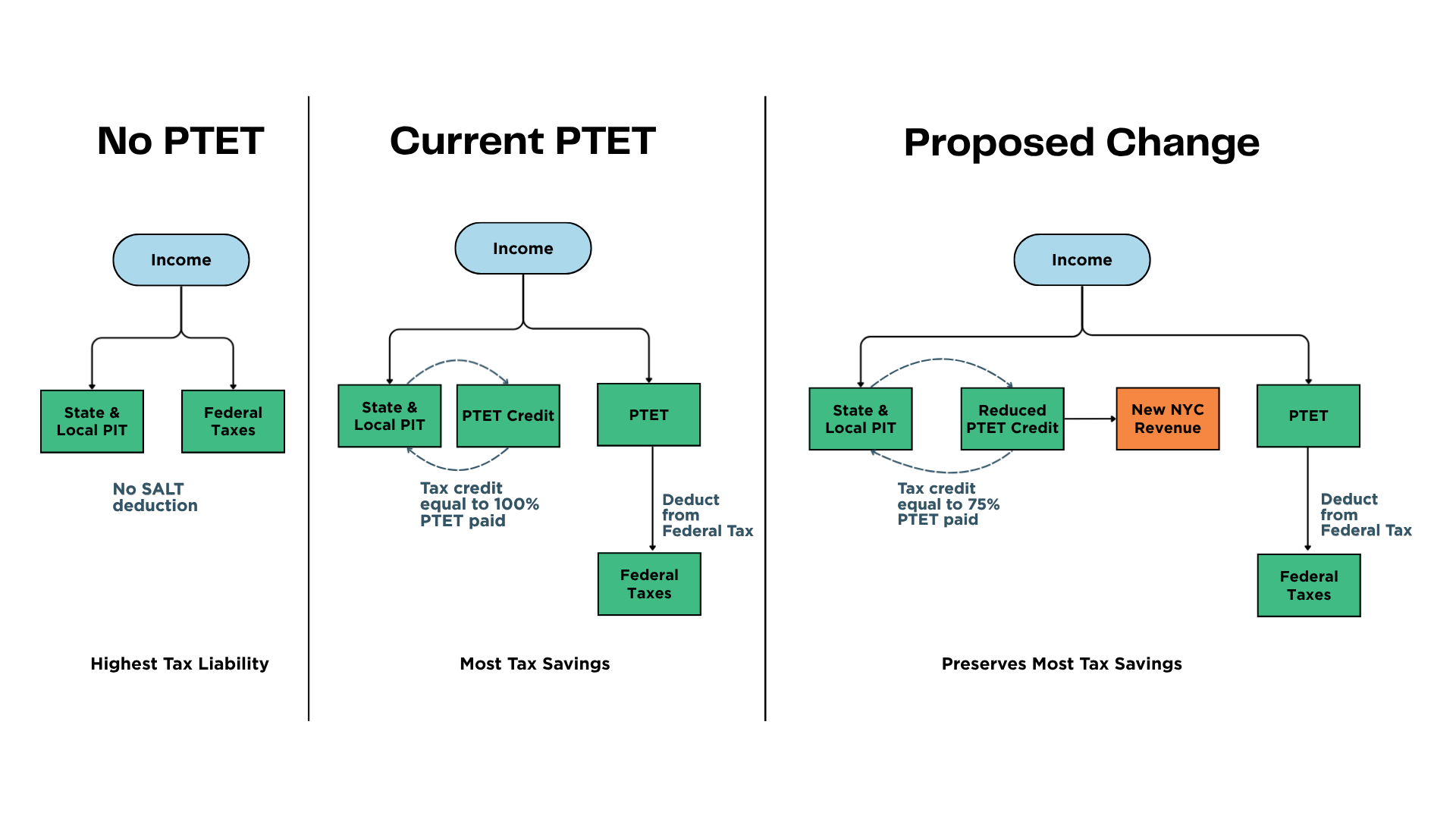
In 2021, New York State enacted the Pass-Through Entity Tax, which can be thought of as a personal income tax masquerading as a business tax. PTET allows recipients of pass-through business income (such as that from a law or consulting partnership or sole proprietorship) to meet part of their state personal income tax liability by paying a business tax. Those who opt-in to PTET pay both state personal income taxes and the new state business tax—but they receive a tax credit from the state equal to the amount of the latter. Because state and local business taxes are deductible from federal taxes, the PTET reduces federal tax liability while leaving state and local tax receipts unchanged.
Figure 1 maps the layers of tax liability involved and table 1 illustrates what the proposed change entails for a typical high earner.
What is New York City leadership proposing?
Mayor Mamdani and Speaker Menin have proposed reducing the credit that PTET taxpayers receive on their New York City income taxes from 100 percent to 75 percent. The PTET credit reduction was endorsed by both chambers of the New York State legislature in their one-house budget proposals. If adopted at the state level, it would raise City revenue by about $700 million.
The proposal’s detractors claim that this change will make New York less competitive for businesses and high-income earners. However, it is worth noting that two of New York’s neighbors, Connecticut and Massachusetts, already reduce PTET credits at the state level and this has not deterred top earners from living in these states: they are the only two states in the US with more millionaire income earners per capita than New York.
Fig. 1. Layers of tax liability with and without PTET
How would a PTET credit reduction affect top earners?
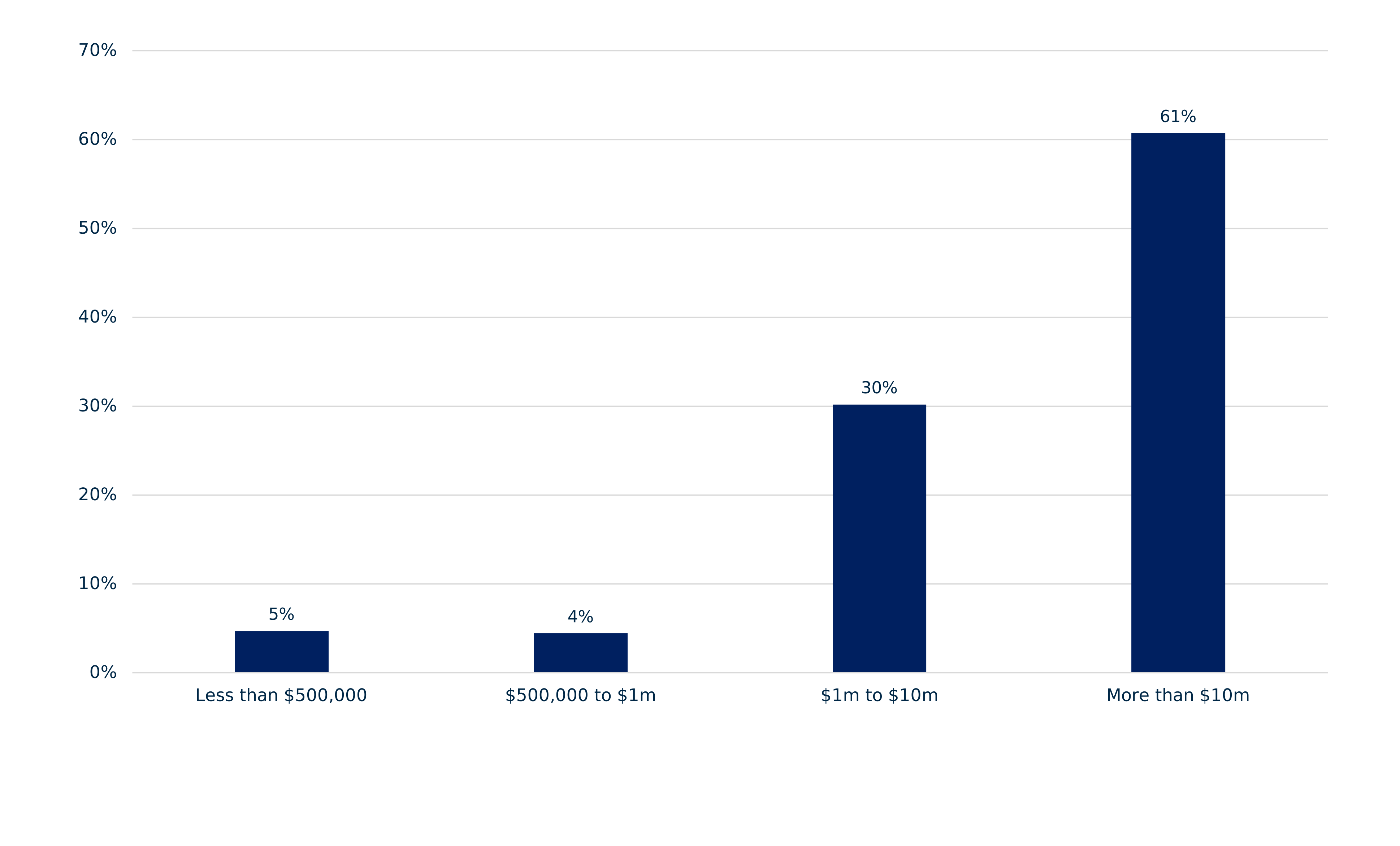
PTET overwhelmingly benefits extremely high earners, who have the highest SALT liabilities and are most likely to receive pass-through business income. FPI estimates that in New York State about 91 percent of PTET tax savings accrue to millionaire income earners and 61 percent goes to those earning more than $10 million, see figure 2.
This change would preserve PTET’s federal tax benefits, so those who benefit from PTET would be better off than they were after the TCJA but before PTET (from 2017 to 2021) and still find the tax credit advantageous. Table 1 illustrates the case of a taxpayer with $1 million in pass-through income with and without PTET and under the proposed change. In this case, the reduction to New York City’s PTET credit would be worth about $10,000. Even still, PTET would confer federal tax savings of about $25,600.
The change proposed by the Mayor and Speaker would be a sharply progressive tax on top incomes that preserves a significant federal tax advantage for millionaire taxpayers.
Table 1. Illustrative example of effect of PTET for taxpayer earning $1 million in pass-through income
| No PTET | Current PTET | Proposed change | |
|---|---|---|---|
| NYS tax liability | $66,000 | $66,000 | $66,000 |
| NYC tax liability | $38,760 | $38,760 | $38,760 |
| NYC PTET credit reduction | $0 | $0 | $9,690 |
| Total NYC revenue | $38,760 | $38,760 | $48,450 |
| Federal tax liability | $327,000 | $292,743 | $292,743 |
| Federal savings under PTET | $0 | $34,257 | $24,567 |
Fig. 2. PTET credits claimed by each income group, as a percent of total credits allocated