Introduction
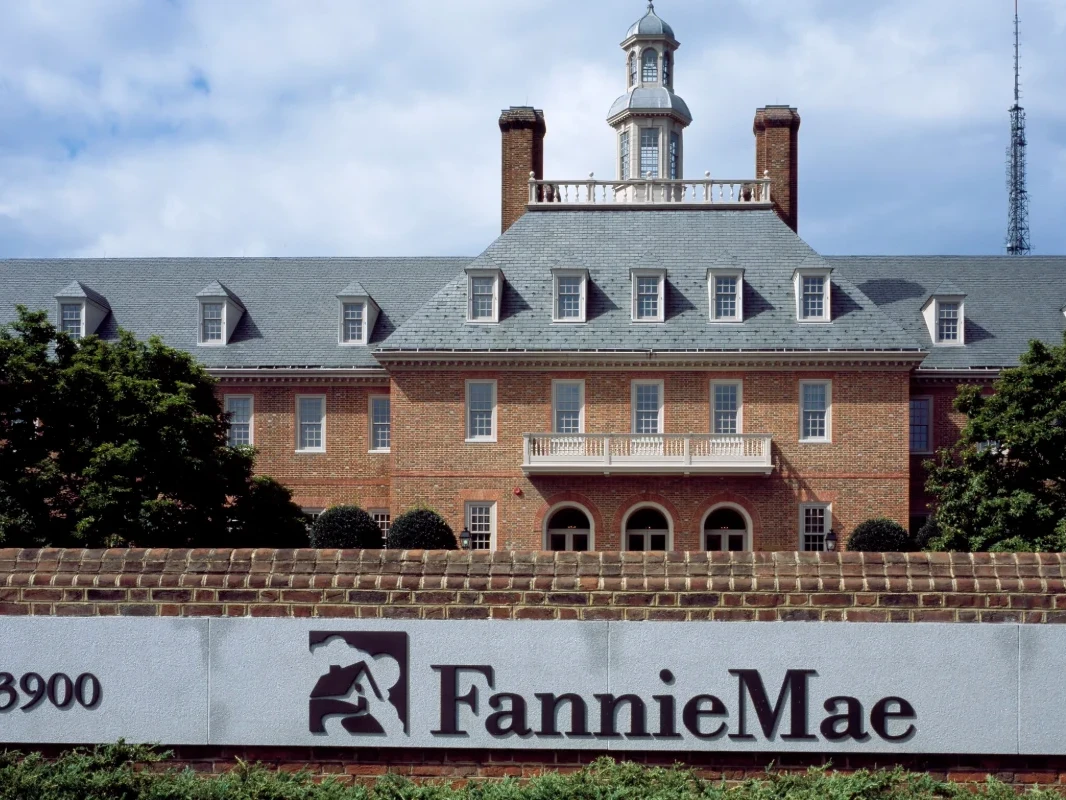
On November 2, 2026, a City Reporter article announced that Fannie Mae and Freddie Mac had changed their financing of rent-stabilized buildings in New York City: Freddie Mac paused all loans to stabilized buildings while assessing the rent freeze’s impact, and Fannie Mae toughened underwriting standards.1 Both entities cited the two-year rent freeze enacted by New York City’s Rent Guidelines Board (RGB), along with 5 percent annual projected increases in housing costs and high interest rates.
The magnitude of the retraction is highly uncertain. In fact, Bill Pulte, Director of the Federal Housing Finance Administration, directly contradicted the article on social media, stating that “It is false to report Freddie Mac has frozen lending on those properties in NYC, and in fact we continue to quote and lend on those properties.”2
With consequential decisions in flux, clear context is needed on the finances of the stabilized housing market. The rent freeze has predictably lowered expected income for buildings with rent-stabilized units, but it is not the primary driver of financial stress. Changes in the lending practices of these massive government-sponsored enterprises (GSEs) can affect availability, cost, and quality of housing for everyday New Yorkers, and policy planning to address the underlying causes of financial stress is an essential first step to protect tenants and sustain the stabilized stock. This article unpacks those underlying causes, including the GSEs’ role in creating the current stress and the need for recalibration.
At the heart of the problem is a pattern of GSE lending to high-risk buildings at high interest rates, which pushed landlords to defer maintenance and raise rents rapidly to cover monthly mortgage payments. Recent pro-tenant policy, from the 2019 Housing Stability and Tenant Protection Act (HSTPA) to this year’s rent freeze, has made rapid rent hikes, and the lending practices that rely on them, nonviable. This positive change will require proactive policy action from the City to protect tenants in financially distressed buildings.
What are Fannie Mae and Freddie Mac?
Fannie Mae was created in 1938 as a government agency to purchase Federal Housing Act-insured home loans from liquidity-strapped financial institutions during the Great Depression. In 1968, Fannie Mae was reorganized into a GSE, jointly owned by public and private stockholders but still bound to its original function of generating housing market liquidity. Freddy Mac was created for similar purposes in 1970 and quickly specialized in packaging purchased mortgages into mortgage-backed securities (MBS). In 1995, the US Department of Housing and Urban Development (HUD) established that the GSEs have an “affirmative obligation to facilitate the financing of affordable housing for low-income and moderate-income families.”3
The GSEs subsequently invested heavily in subprime mortgages throughout the 2000s, leading to insolvency during the 2008 financial crisis. In response, Congress established the Federal Housing Finance Agency (FHFA) as conservator of the GSEs to preserve and conserve their assets. This conservatorship gives the FHFA ownership of the GSEs’ assets, total control over management decisions and personnel, and responsibility for the GSEs’ liabilities.4 Since the financial crisis, GSEs have become an even more dominant force in mortgage issuance across the housing sector.5
Freddie Mac’s Role in New York City’s Stabilized Housing
The GSEs, and Freddie Mac in particular, have issued large quantities of high-risk loans for rent stabilized buildings in New York City. These loans were justified by an expectation that rapidly rising rents would drive up property values. Between 1997 and 2019, New York City law allowed rent stabilized units to be fully deregulated at a set rent level, and landlords could raise rents sharply between tenancies even without new investment in the unit. Under these rules—rational under city law—rent stabilized buildings were valued as if they would eventually become market rate, compelling some landlords to harass tenants and neglect repairs to speed along the process of rent hikes and deregulation. The GSEs lent at valuations dependent on deregulation and conversion in a low-interest-rate environment that made debt easy to take on.
In 2019, New York State prohibited deregulation and severely limited rent increases between tenancies, a law that has sharply reduced evictions citywide. By prohibiting deregulation, the law predictably and intentionally lowered the value of many stabilized buildings—the goal was to protect tenants from extortion and harassment and to preserve the stabilized stock. The HSTPA appears to have largely succeeded, as demonstrated by the 23 percent drop in evictions between 2019 and 2023.6 Naturally, when the income earning potential of a unit declines, so does the value of the building. A July 2021 Furman Center analysis found that buildings with 26%–75% stabilized units lost an average of $50 per square foot in value compared to market-rate buildings.7
The rapid changes in valuation have caused fury among landlords who invested in converting their buildings to market rate. The anger is understandable, but it is not cause to reverse policy that has ultimately right-sized valuations
Since 2000, the GSEs’ share of multifamily housing units has risen steadily, from less than 15 percent in 1991 to more than 45 percent in 2020.8 As they have come to dominate the multifamily sector, the GSEs have leaned into the lending practices that relied on tenant displacement, setting risk tolerance and interest rate standards that smaller lenders follow.
In 2015, Freddie Mac launched the Small Balance Loan program to finance rent-stabilized buildings with fewer than fifty units. Since then, it has issued mortgages to landlords that cost far more than ongoing building upkeep—and landlords of sufficiently distressed housing have been shown to divert maintenance funding to cover monthly mortgage costs.9
One case study, revealed by researchers with the NYC Multifamily Research and Action Center, is that of Emerald Equity Group. Freddie Mac financed most of the rent-stabilized portfolio of Emerald affiliate Isaac Kassirer, who operated fifteen hundred units in East Harlem and the Bronx as of 2018. Reporting by the Indypendent showed Kassirer deploying the exact strategy the pre-HSTPA stabilized market incentivized: keeping a large share of units in physical distress while offering buyouts to tenants so he could hike rents in now vacant units. Emerald was emblematic of Freddie Mac’s portfolio strategy.10 Freddie Mac-financed-landlords were found to be more likely to have unaddressed code violations or tax liens across the board.11
Given Freddie Mac’s heavy investment in these high-risk assets, it should come as no surprise that both it and Fannie Mae would readjust lending practices around lower average annual rent hikes. Indeed, deterring lenders like Freddie Mac from financing buildings at extortionate interest rates should be seen as a positive externality of the rent freeze. Properties like those of the Emerald Group are harmful to tenants in their current condition, and owners like Isaac Kassierer should not be enabled to place tenants in dangerous and inhumane conditions.
Reasons for Reevaluation go Beyond the Rent Freeze
The rent freeze will impact revenue expectations and property valuations for stabilized buildings, but it is not the only cause of the possible lending contraction. The City Reporter flagged that Fannie and Freddie project 5 percent annual increases in housing costs—fifty basis points above CPI in the New York metro over the past year and one percentage point higher than rent inflation over the same period. This 5 percent cost increase is significantly larger than the revenue landlords will lose from a rent freeze; the average annual RGB increase on one-year stabilized leases has been just 1.78 percent over the past ten years.12 Assuming 5 percent cost growth holds across an eight-year rent freeze, cost increases will contribute far more to lost landlord revenue—and the resulting reduction in property values—than the freeze itself.
Fig. 1. Projected Cost Increases Will Account for Far Greater Profit Erosion than an Eight Year Rent Freeze
Projected Housing Cost Increases and Average Lost Income from Continuous Rent Freezes, As Percent of 2026 Costs
100% building stabilization is assumed to simplify revenue loss calculation
The gap between these causes widens further for buildings that are not 100 percent stabilized, since market rate units lose no revenue at all from RGB policy. If Fannie and Freddie’s cost growth predictions are accurate, New York City should pursue cost containment strategies such as the public multifamily property insurance fund now being developed by an interagency working group of the city government. Such measures can limit costs to tenants and prevent landlords from slipping into the financial distress that encourages neglect and displacement.
The Need to Develop Policy Solutions to Manage the Transition
One cost of this shift toward more responsible lending falls on tenants in currently distressed buildings that can no longer be financed through GSE channels. If landlords risk default, tenants could face spiraling maintenance problems, sudden rent hikes, or displacement.13 Proactive municipal and state policies can mitigate these risks by placing distressed buildings in the hands of responsible actors, public or private, with the tools and will to make necessary repairs and maintain affordability. Robust, well-funded code enforcement must be brought to bear on buildings in foreclosure to facilitate these transitions and force existing landlords to maintain a baseline standard of housing safety.14
Note on Data Limitations
Uncertainty around Fannie Mae and Freddie Mac’s current rent-stabilized lending policies mirrors a lack of clarity around the finances of rent-stabilized landlords themselves. New York City has a uniquely robust data environment on the operating side of rental housing finance: Publicly available data on the incomes and operating expenses of landlords exists through data sets such as the Notice of Property Values and the Housing and Vacancy Survey. Operating expenses cover costs associated with running a building, such as maintenance, insurance, fuel, and administrative expenses, but exclude mortgage and other loan payments. The RGB uses this data to publish extensive annual reports on the operating position of rent-stabilized landlords, which show very low rates of negative net operating income—around 9.2 percent in 2024, down 0.1 percentage points from the prior year.15
Unfortunately, no such data is publicly available on the financial costs of buildings, whether or not they are GSE-funded. This makes it difficult for the public and for public and private research institutions to assess Fannie Mae and Freddie Mac’s claims about the financial health of their own portfolios. Federal policy makers, from New York and nationwide, should mandate financial transparency for GSE portfolios. Congress has broad powers to requisition data from Congressionally mandated corporations like the GSEs and should use them to make GSE holdings public information.