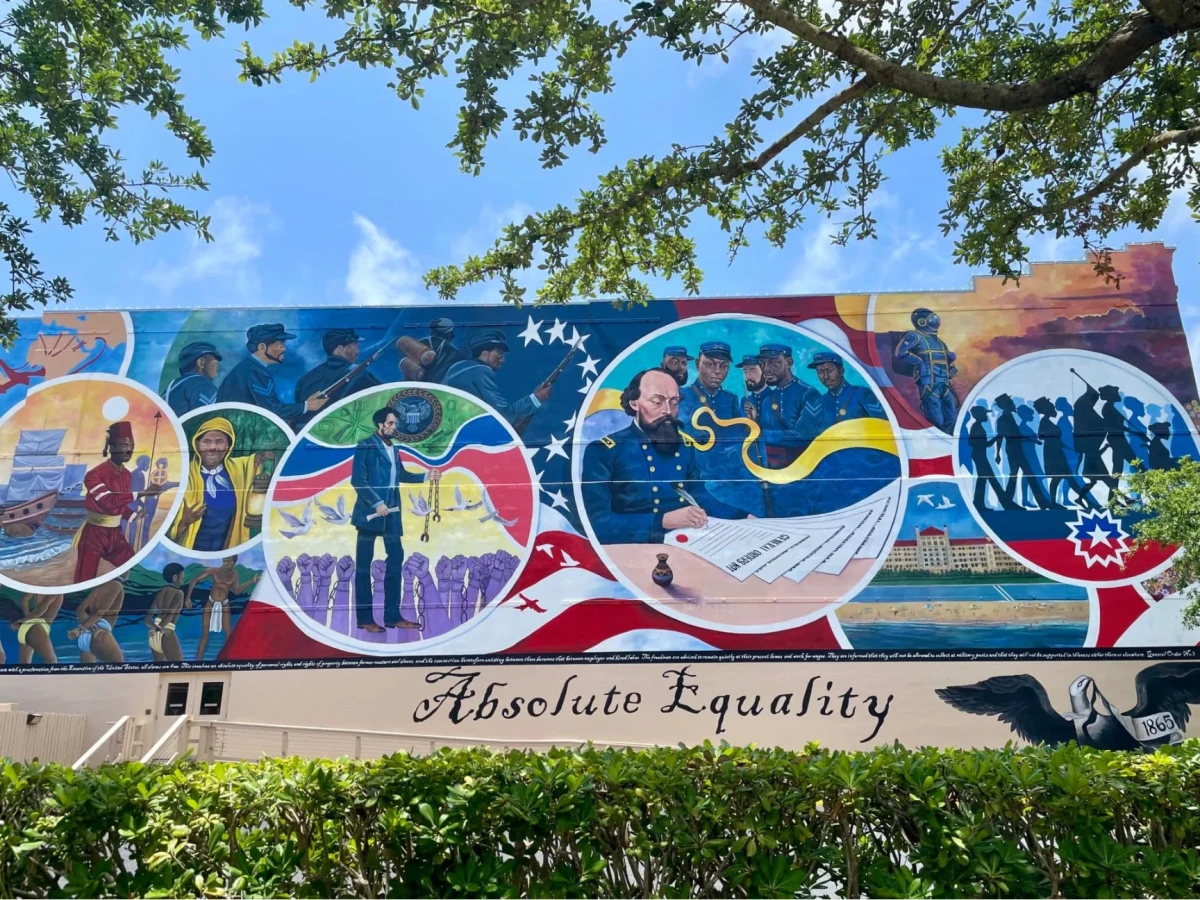
“Pay your taxes and be free”—with these words Matthew Gaines, a formerly enslaved Texas state senator best remembered for his impassioned Juneteenth sermons, made the case for emancipatory taxation.
This Juneteenth holiday weekend, we would like to share four Reconstruction-era state fiscal policy lessons from Vanessa Williamson’s The Price of Democracy →.
1. For freedmen, freedom meant schools, land, and taxes. Matthew Gaines → argued that the failure of the federal government to redistribute property in the agrarian South meant state fiscal policy was the path to real liberty. High property taxes would force planters to sell portions of their massive estates at rates affordable for Black families. “If there is any virtue in taxation,” Gaines proclaimed, “we will tax until we tax them out of their lands.”
While taxing rich planters was crucial, it was equally important for landless new citizens to embrace broad-base taxes, he argued. Through modest contributions from all citizens, freedmen and small farmers could build new schools. Capped poll taxes earmarked for education enabled states to train teachers and build thousands of schoolrooms, creating the South’s first public education systems. Literacy rates soared. By 1875, South Carolina surpassed New York in school enrollment, which doubled in a four-year period.
2. Black Reconstruction was overturned by a counterrevolution conducted in the name of the taxpayer. Former Confederate leaders organized “Tax-Payers’ Conventions” to challenge the legitimacy of multiracial governments. These “redeemers” cast themselves as the victims of corrupt fiscal regimes led by Black Americans, whom they falsely accused of paying no taxes. On this basis, they brought poor Whites, including Republicans, into their coalition. Through tax cuts, tax evasion, corporate giveaways, and cost-shifting, planters successfully gutted state capacity and dismantled public infrastructure including schools, universities, and hospitals.
These taxpayers’ leagues also provided respectable cover for terrorism, encapsulated in the era’s popular slogan → “old men to the tax unions and young men to the rifle clubs.” Paramilitary groups including the Ku Klux Klan and the Red Shirts presented themselves as defenders of the taxpayer, intimidating property assessors and Black voters. In a two-year span, the Klan killed more than two dozen tax collectors in Appalachia.
3. The “taxpayer” appeal helped planters garner support in the North, where industrial elites felt similarly beset by the egalitarian ambitions of immigrant communities. In New York, Governor Samuel Tilden supported the creation of taxpayers’ leagues and championed Southern-style constitutional amendments to limit local fiscal power.
Tilden’s 1875 commission proposed putting municipal taxation and spending power in the hands of a Board of Finance elected only by those who paid large sums in property tax or very high annual rents, effectively ending universal male suffrage and curbing the political power of those without property. This constitutional amendment was defeated → by organized labor.
4. Jim Crow was codified through regressive fiscal measures, many of which survive to this day. Redeemers wrote strict property tax caps into state constitutions that disenfranchised Black voters, insulating the wealthy minority from Black and working-class majorities. Mississippi still requires a three-fifths supermajority in the legislature to approve any state tax increase, while Alabama, Texas, and Arkansas maintain strict constitutional limits → on property taxes.
As we celebrate the end of chattel slavery in the United States, we remember that the fight for freedom has been inseparable from the fight for democratic state capacity and robust public goods that serve the interests of all.