FPI Statement on City Budget Crisis: It’s Time to Raise City Taxes
January 28, 2026 |
New York, NY | Fiscal Policy Institute Executive Director Nathan Gusdorf released the following statement on behalf of FPI:
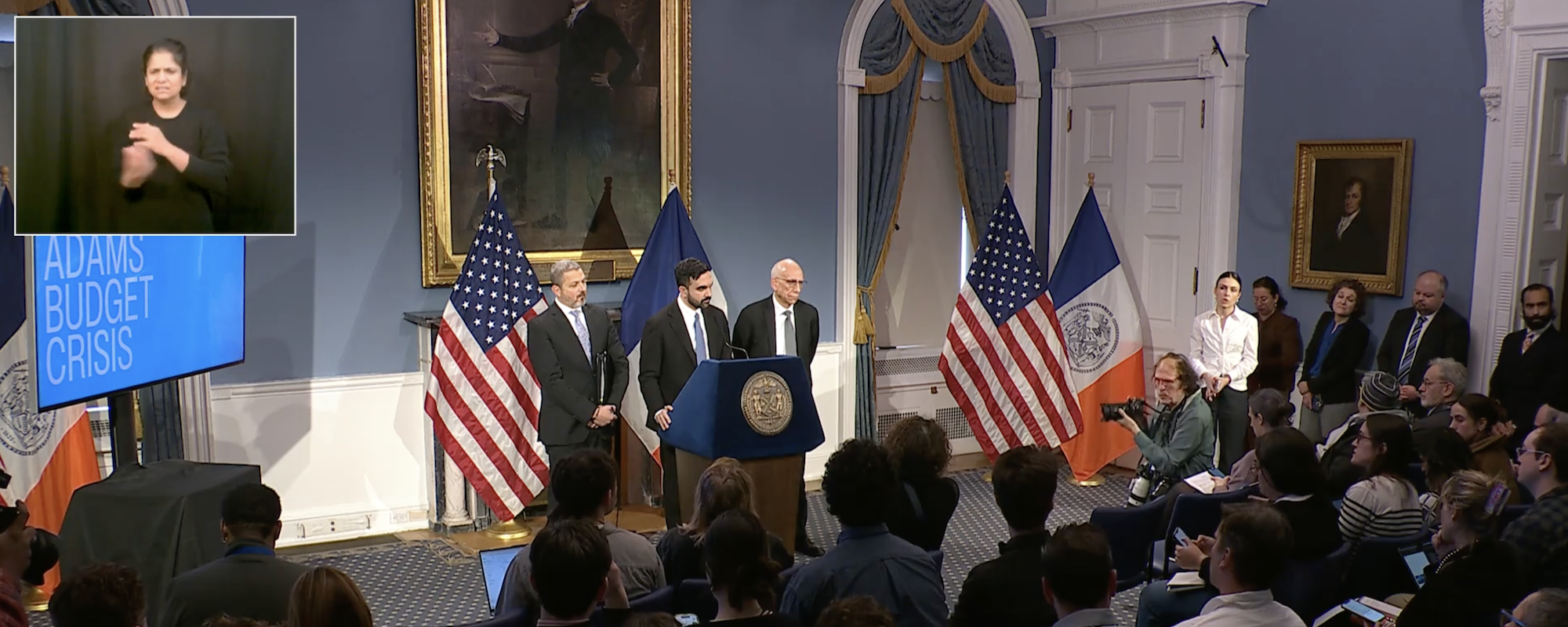
Today, Mayor Zohran Mamdani announced that New York City is facing a $12 billion fiscal deficit. This deficit is the consequence of multi-year trends, including admirable but underfunded legislative initiatives such as housing vouchers and the class size mandate. It is also the legacy of fiscal mismanagement under the Adams administration, including misleading and inaccurate forecasts that FPI routinely criticized, uncontrolled overtime, and temporary savings achieved by understaffing agencies. And, as the Mayor pointed out, it is a product of former Governor Cuomo’s repeated raids on funds owed to the city—raids which have echoed in recent times, as when last year’s State budget reduced planned school aid to New York City by $320 million.
The City’s budget challenges can be solved without slashing services—and the Mayor’s proactive commitments to childcare, affordable housing, and transit investments can be realized—if the State will authorize the City to raise taxes on the highest earners and the most profitable corporations. And the State, which currently runs annual surpluses between $5 and $10 billion, ought to increase aid to the City as well.
There are compelling tax policy reasons for a tax increase. The City’s income tax is virtually flat, in contrast to both the federal and State income taxes, which impose higher tax rates on the highest earners. The Mayor’s 2 percent tax on millionaire-earners in New York City would raise billions of dollars annually, make the tax law fairer, and, as FPI research has shown, is unlikely to have any noticeable effect on millionaire migration. Increasing the City’s corporate tax rate is another sound option for revenue. Contrary to a common misunderstanding, corporations are taxed based on where they do business, not where they are located, such that a large share of corporate tax revenue comes from corporations in other states selling goods and services to New Yorkers.
New York City is fortunately in a strong economic position to manage its budgetary challenges. It has a strong tax base driven by a high-earning population that continues to see significant income growth. As long as Albany is willing to do its part and authorize City tax increases, New Yorkers will be able to weather the storm.
The Fiscal Policy Institute is an independent, nonpartisan think tank that advances sound and equitable fiscal policy to strengthen New York’s economy through research, analysis and strategic communications.
###
FPI Statement on City Budget Crisis: It’s Time to Raise City Taxes
January 28, 2026 |
New York, NY | Fiscal Policy Institute Executive Director Nathan Gusdorf released the following statement on behalf of FPI:
Today, Mayor Zohran Mamdani announced that New York City is facing a $12 billion fiscal deficit. This deficit is the consequence of multi-year trends, including admirable but underfunded legislative initiatives such as housing vouchers and the class size mandate. It is also the legacy of fiscal mismanagement under the Adams administration, including misleading and inaccurate forecasts that FPI routinely criticized, uncontrolled overtime, and temporary savings achieved by understaffing agencies. And, as the Mayor pointed out, it is a product of former Governor Cuomo’s repeated raids on funds owed to the city—raids which have echoed in recent times, as when last year’s State budget reduced planned school aid to New York City by $320 million.
The City’s budget challenges can be solved without slashing services—and the Mayor’s proactive commitments to childcare, affordable housing, and transit investments can be realized—if the State will authorize the City to raise taxes on the highest earners and the most profitable corporations. And the State, which currently runs annual surpluses between $5 and $10 billion, ought to increase aid to the City as well.
There are compelling tax policy reasons for a tax increase. The City’s income tax is virtually flat, in contrast to both the federal and State income taxes, which impose higher tax rates on the highest earners. The Mayor’s 2 percent tax on millionaire-earners in New York City would raise billions of dollars annually, make the tax law fairer, and, as FPI research has shown, is unlikely to have any noticeable effect on millionaire migration. Increasing the City’s corporate tax rate is another sound option for revenue. Contrary to a common misunderstanding, corporations are taxed based on where they do business, not where they are located, such that a large share of corporate tax revenue comes from corporations in other states selling goods and services to New Yorkers.
New York City is fortunately in a strong economic position to manage its budgetary challenges. It has a strong tax base driven by a high-earning population that continues to see significant income growth. As long as Albany is willing to do its part and authorize City tax increases, New Yorkers will be able to weather the storm.
The Fiscal Policy Institute is an independent, nonpartisan think tank that advances sound and equitable fiscal policy to strengthen New York’s economy through research, analysis and strategic communications.
###